
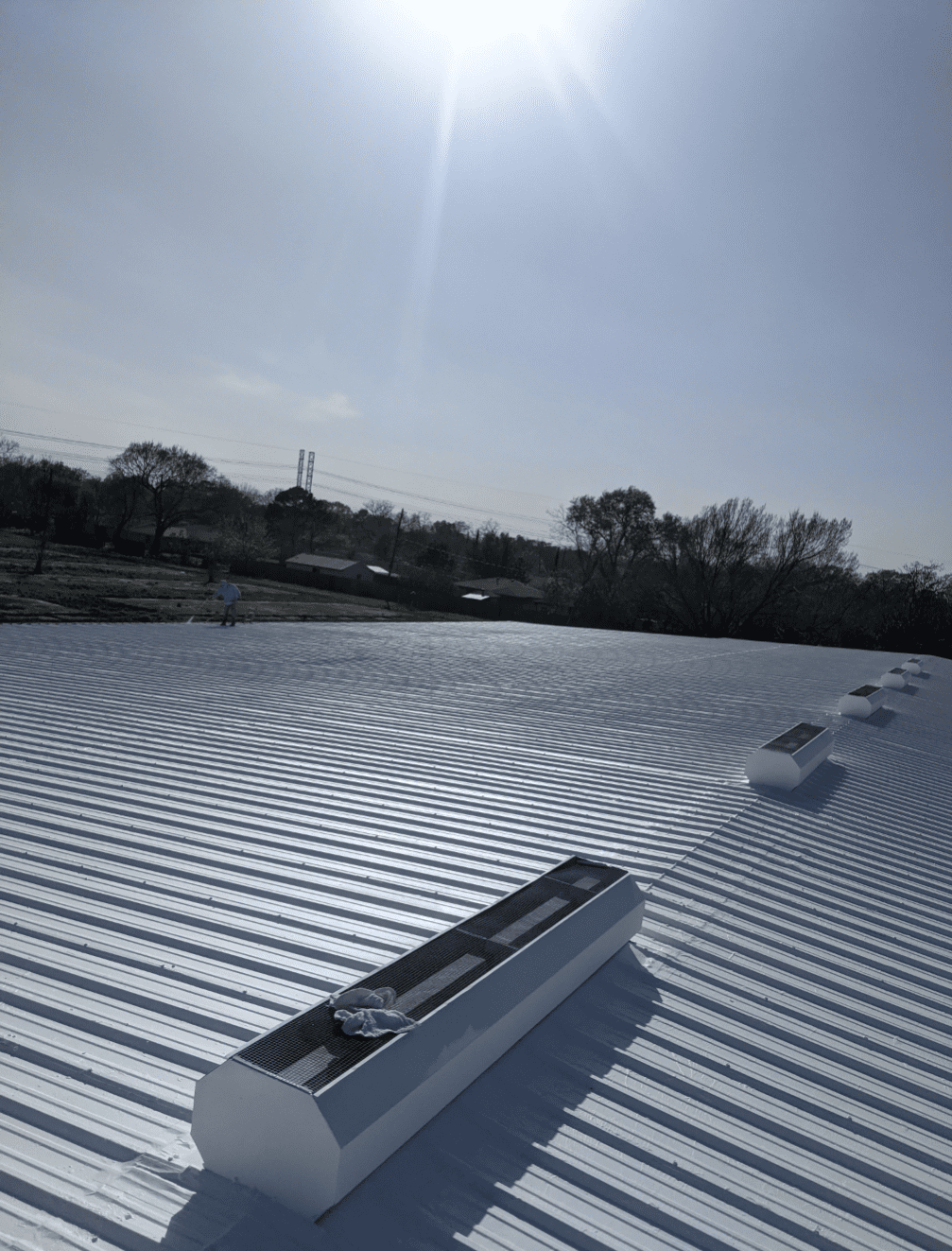
Commercial Roof Coatings for Houston-Area Properties
US ROOF provides commercial roof coatings for office buildings, warehouses, retail properties, and apartment communities across Houston, Richmond, Alief, Needville, and Missouri City. We inspect the existing roof, handle needed repairs, and apply the right coating system—including silicone and metal roof coatings—to help extend roof life and improve performance.
Roof Coatings Are a Science, Not a Spray-On Fix
A professional roof coating system is not something that should simply be rolled or sprayed over an existing roof and expected to solve every problem. Successful commercial coating systems depend on the condition of the substrate, the cleanliness of the surface, the quality of repairs, and the compatibility of the coating with the roof assembly below it. If the roof is dirty, wet, unstable, or deteriorated beyond what restoration can address, the coating above it will not perform the way it should.
Before any coating is applied, the roof has to be prepared correctly. That usually means deep cleaning with power washing to remove dirt, debris, biological growth, chalking, oxidation, and other contaminants that interfere with adhesion. Coatings bond both chemically and mechanically to a clean, sound surface. If preparation is skipped or rushed, the bond is compromised from the start. In our experience, poor preparation is one of the most common reasons roof coating systems fail early.
US ROOF treats coating restoration like a technical roofing process, not a shortcut. That means inspecting the roof carefully, identifying weak areas, making repairs where needed, and preparing the surface so the system has a real chance to perform for the long term.
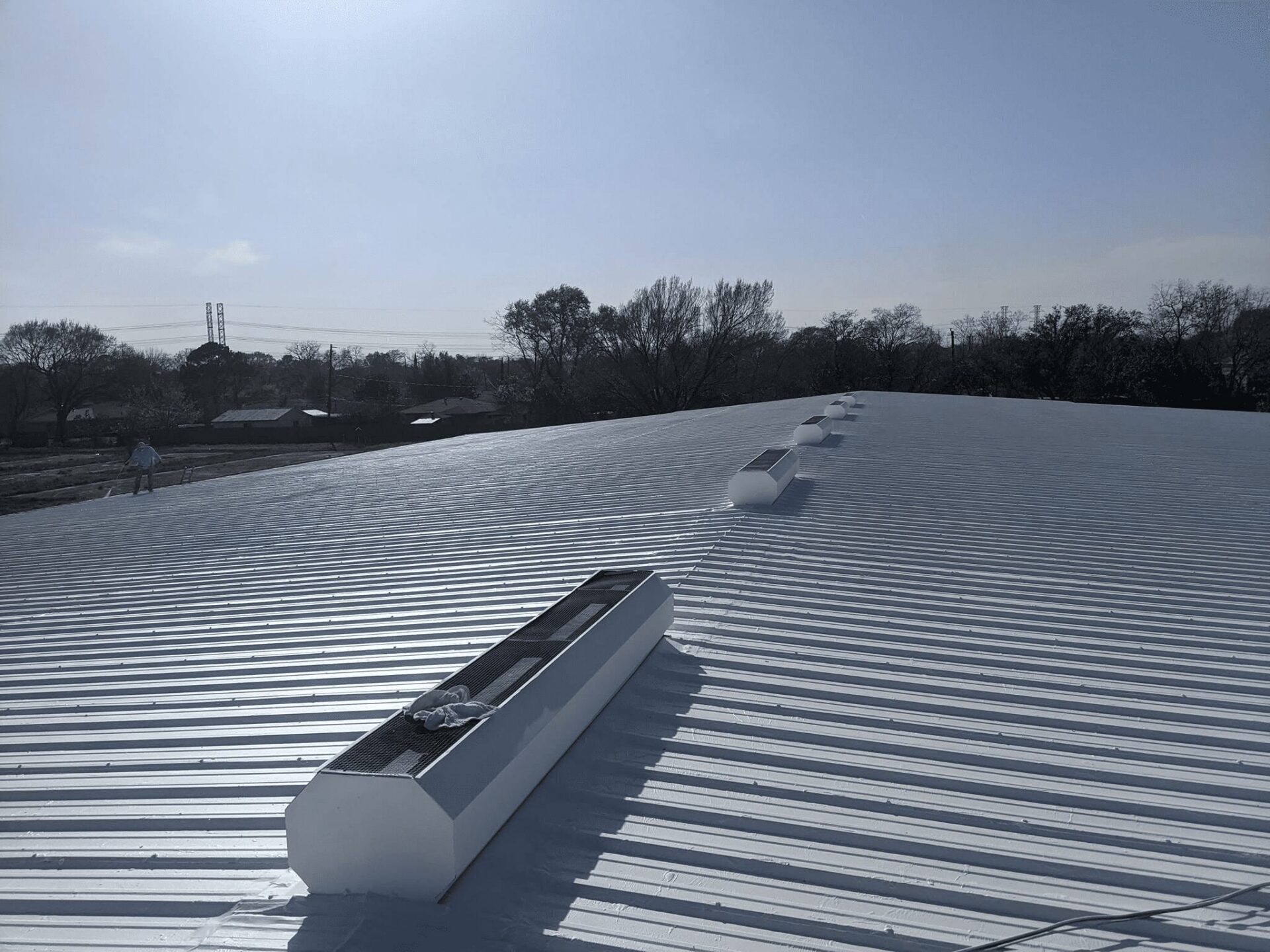
Timing and Conditions Matter
Even the right coating can fail if it is applied under the wrong environmental conditions. Temperature, humidity, dew point, surface moisture, and weather timing all affect how a coating bonds and cures. Applying a system too early in the morning when moisture is still present, too late in the day when curing time is limited, or during periods of high humidity can reduce adhesion and affect long-term performance.
This is especially important in the Houston area, where heat, humidity, and sudden weather shifts can change roof conditions quickly. A roof surface may look dry and still hold moisture that interferes with bonding. Dew point matters. Surface temperature matters. Cure windows matter. These are not small details; they are part of the science behind durable commercial coating systems.
US ROOF monitors weather and jobsite conditions closely so coatings are applied at the right time and under the right circumstances. That discipline is part of why properly installed systems last longer and perform more reliably.
Elastomeric, Acrylic, and Silicone Coatings – Understanding the Difference
Not all roof coatings behave the same way. Elastomeric coatings are a broad category of flexible coatings designed to expand and contract with roof movement. Within that category, different chemistries offer different strengths and limitations. Choosing the right system depends on roof type, drainage, exposure, and the condition of the existing assembly.
Acrylic coatings are often valued for reflectivity and cost efficiency. They can be an excellent fit for many restoration projects, including some metal roof coatings, when the roof drains properly and the system is installed over a well-prepared substrate. However, acrylics are generally more vulnerable to long-term standing water. Under ponding conditions, re-emulsification can become a concern, which is why drainage and roof geometry matter so much.
Silicone roof coatings are known for waterproofing performance, UV resistance, and their ability to tolerate permanent ponding water better than acrylic systems. That makes silicone a strong option for flat and low-slope roofs where water may remain on the surface after rain. Commercial roof coatings should always be selected based on the roof in front of you, not on a one-size-fits-all sales pitch.
When Silicone Roof Coatings Are the Right Choice
Silicone roof coatings are often the right choice when waterproofing is the top priority and the roof has areas prone to ponding water. Their 100% waterproof performance makes them especially well suited for flat and low-slope systems, including failed modified bitumen roofs and other aging commercial assemblies that still qualify for restoration.
Silicone can also be used on built-up roofs with gravel surfaces, but only after the gravel is removed and the substrate is properly prepared. That preparation step is critical. A coating cannot perform through loose surfacing, contamination, or unstable material. On dead-flat roofs, silicone’s resistance to standing water is often its standout advantage over acrylic coatings.
For owners comparing silicone roof coatings with other systems, the real question is not which product sounds best in general. The question is which chemistry best matches the roof’s drainage, condition, and restoration goals.
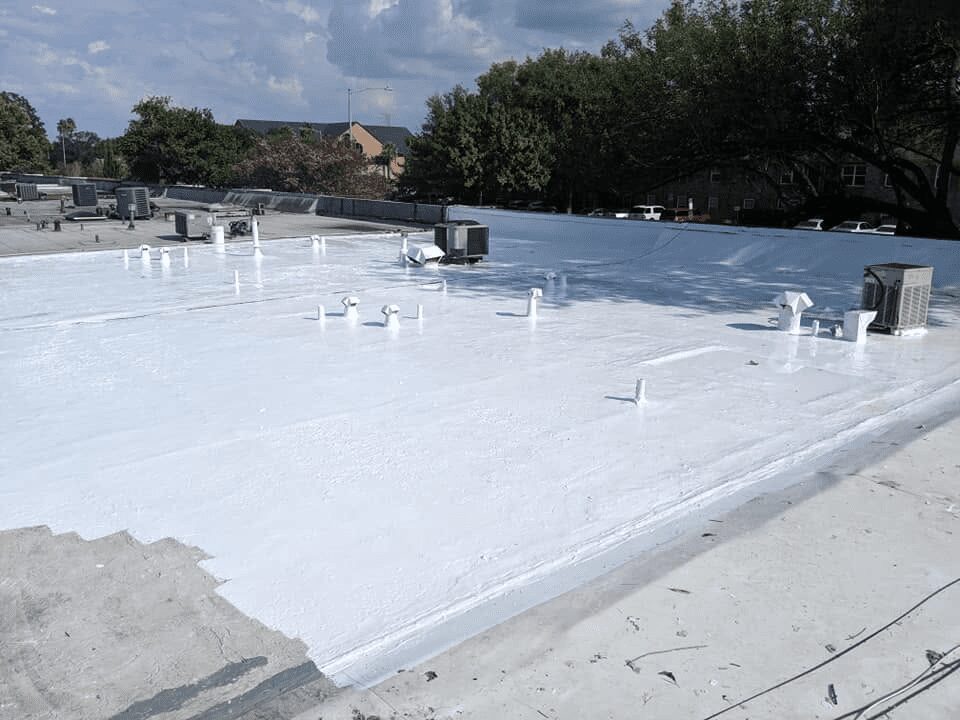
We Restore the Roof Before We Coat It
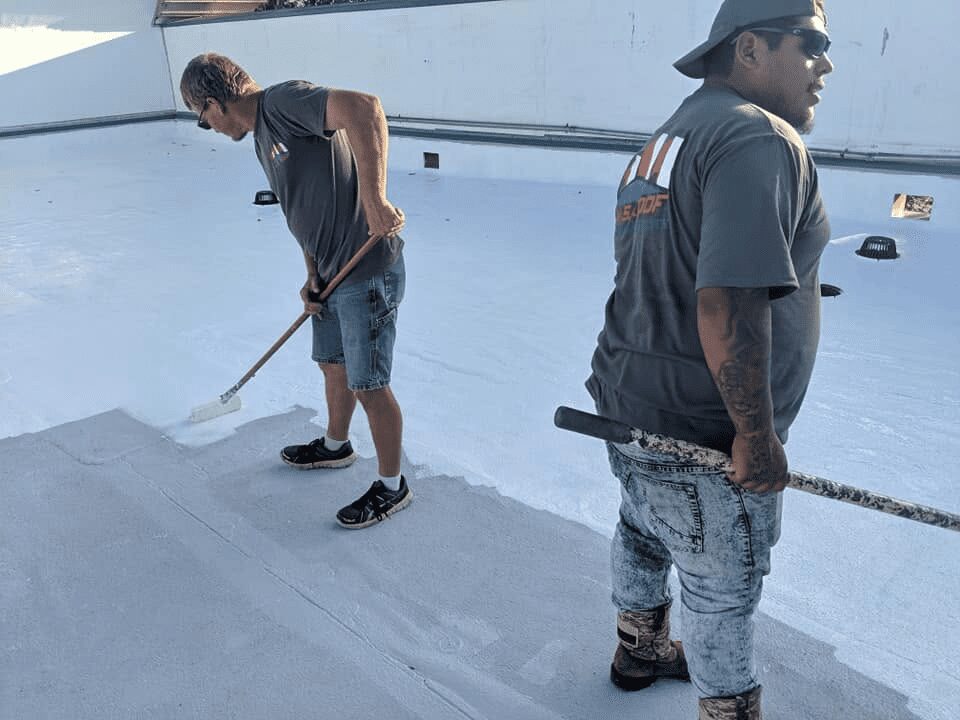
US ROOF specializes in repairing and restoring the existing base roof before applying any coating material. That means we do not treat a coating as a way to hide a failing roof. We address the roof system first, then apply the restoration system over a surface that has been repaired, cleaned, and prepared to receive it.
This preparation, combined with correct cleaning and proper application timing, is what gives a coating system its best chance to perform over the long term. It is also what separates a restoration-minded contractor from companies that simply spray over visible problems and hope the coating covers them up.
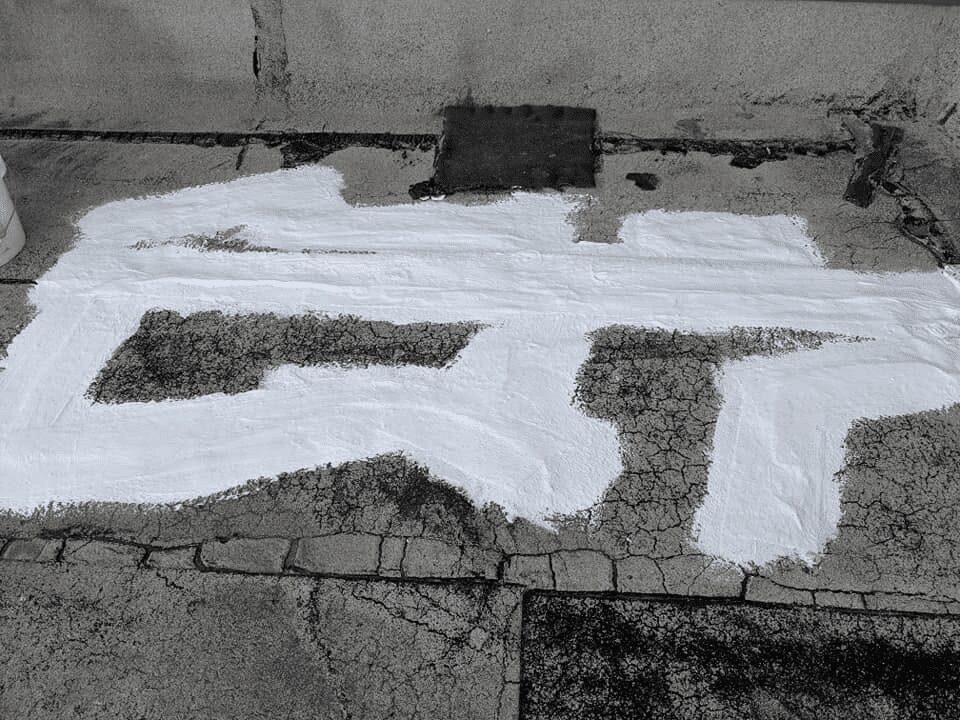
The US ROOF Dual System for Failed Modified Bitumen Roofs
For failed modified bitumen roofs that still qualify for restoration, US ROOF uses an in-house Dual System designed as a permanent restoration solution rather than a temporary fix. The process begins by repairing and restoring the modified bitumen substrate itself. Once the roof is stabilized and properly prepared, we apply an acrylic base layer to help preserve and insulate the substrate. We then top-coat that system with silicone to create the waterproof barrier.
This layered approach works because each component serves a purpose. The acrylic base supports preservation of the underlying roof and contributes to the overall restoration assembly, while the silicone top layer delivers the waterproofing performance that is critical on low-slope roofs. In US ROOF’s professional position, this system provides a highly cost-efficient alternative to full replacement and, when a roof qualifies and the system is applied correctly, a more durable and reliable long-term solution over time.
The US ROOF Dual System carries a 20-year warranty, with conditions. Not every roof will qualify. Eligibility depends on the roof’s condition, substrate, and the findings of a professional inspection. That qualification process matters because a permanent restoration solution only works when the roof is a legitimate candidate for restoration in the first place.
Will Your Roof Qualify?
Not every roof is a candidate for coating restoration. Structural soundness, substrate condition, trapped moisture, drainage, attachment, and the extent of deterioration all affect whether these systems are appropriate. US ROOF evaluates these factors during an on-site inspection and only recommends a coating system where we believe it will genuinely perform.
Benefits of Commercial Roof Coating Restoration
When a roof qualifies, commercial roof coating systems can offer major practical advantages. Restoration is often significantly less expensive than a full tear-off and replacement. It usually creates less disruption for occupied buildings, which matters for office, retail, industrial, healthcare, educational, and multifamily properties that need to stay operational during the work.
Reflective coating systems can also help reduce roof surface temperatures, which is valuable in the Houston climate. In addition, restoration can reduce landfill waste by avoiding a full tear-off of the existing roof assembly. Depending on the project and accounting treatment, a restoration may also be treated as a maintenance expense rather than a capital replacement, although owners should confirm that with their accountant or tax professional.
Manufacturer-Backed Coating Systems
US ROOF applies manufacturer-grade coating systems to manufacturer specification, which is essential for both performance and warranty validity. We work with proven systems from Sherwin-Williams, Gaco, GAF, Henry, and Karnak. Product quality matters, but specification compliance matters just as much. A coating system should be installed the way the manufacturer intends, over the right substrate, at the right thickness, and under the right conditions.
Roof Coating FAQs
Can any roof be coated?
No. A roof has to be structurally sound enough and in the right condition for restoration. US ROOF inspects the substrate, moisture condition, drainage, and overall roof health before recommending a coating.
How long do roof coatings last?
Service life depends on the roof type, coating chemistry, preparation quality, application conditions, and ongoing maintenance. A properly specified and properly installed system can provide long-term performance, but longevity always depends on roof qualification and correct installation.
Why does the roof need to be cleaned first?
Coatings need a clean, sound surface to bond correctly. Dirt, chalking, debris, oils, and moisture interfere with adhesion, which is why deep cleaning and preparation are essential parts of a successful restoration system.
What’s the difference between acrylic and silicone coatings?
Acrylic coatings are often reflective and cost-effective, especially on roofs with positive drainage. Silicone roof coatings are generally better suited for waterproofing and resistance to permanent ponding water, which can make them the better fit on flatter roofs.
Is a coating really permanent?
US ROOF views qualified restoration systems, including our Dual System for certain modified bitumen roofs, as permanent solutions when the roof qualifies and the system is applied correctly. That position is backed by warranty in qualifying cases, but not every roof is eligible and conditions always apply.
Request a Roof Coating Inspection
If you own or manage a commercial or multifamily property in the Houston area, US ROOF can inspect your roof and determine whether coating restoration is the right solution. Contact us to schedule an inspection, or review our NRG Stadium commercial roof coating case study and our Pasadena metal roof coating case study to see how restoration works in real-world conditions.